Evaporative Cooling System vs Air Conditioning: Which is better?
When comparing evaporative cooling systems vs. air conditioning, most Sydney homeowners want to know one thing. Which option will keep the home more comfortable?
Both systems are designed to help you stay cool in summer. However, they work in very different ways. One uses water evaporation and a steady flow of fresh air. The other uses refrigeration technology for stronger temperature control, better humidity management, and more reliable comfort.
If you are planning a new system, it is worth looking beyond the upfront cost. Sydney’s climate, your home layout, your comfort expectations, and long-term running costs all matter.
Planning an air conditioning installation in Sydney? Ozcon Air Solutions supplies and installs quality systems tailored to your home, layout, and comfort needs. Speak with our team today for expert advice on 1300 341 694 or take advantage of our air conditioning specials.
What is an evaporative cooling system?
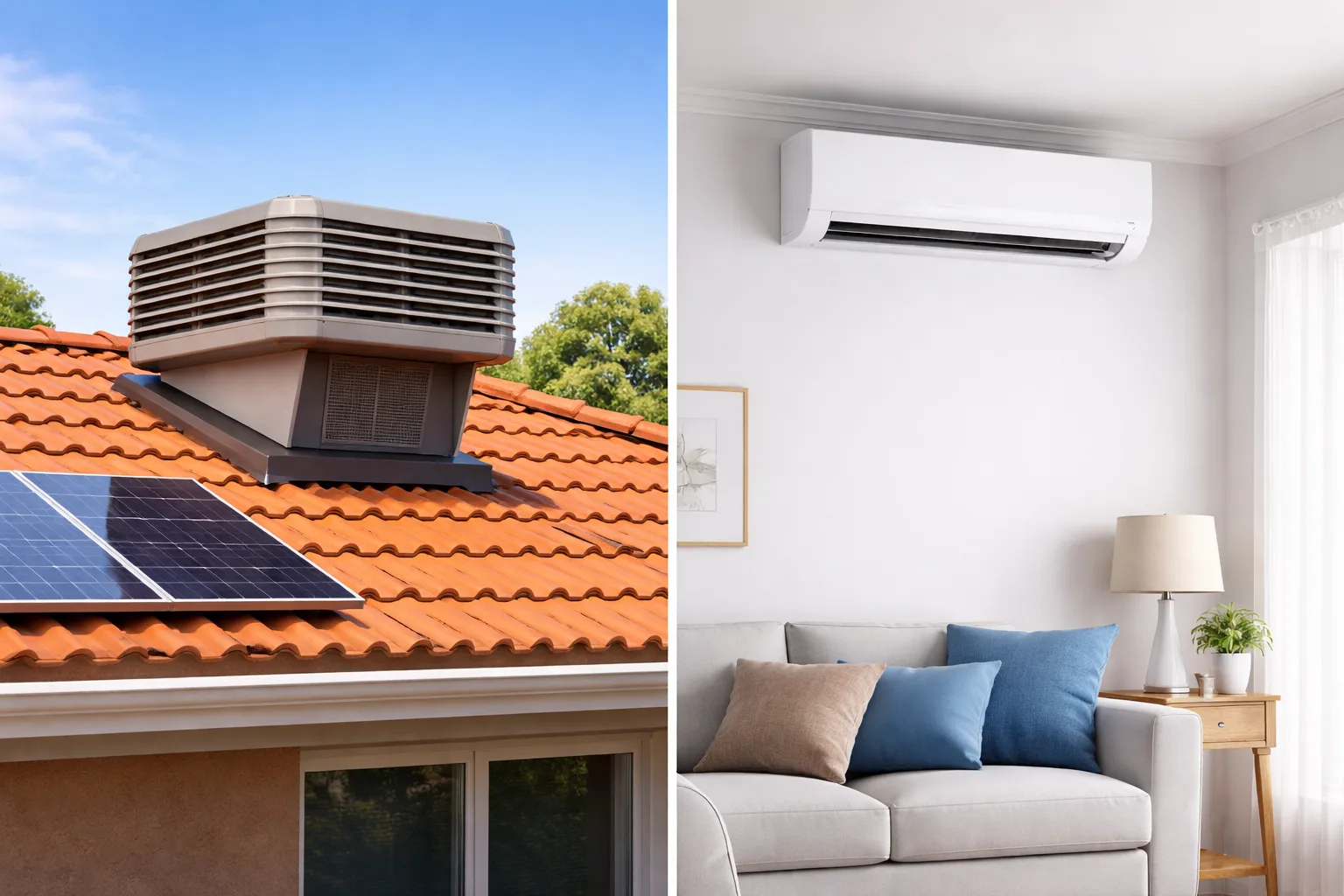
An evaporative cooling system works by drawing in outside air. That air passes through water-soaked pads. As the water evaporates, the air cools down. The system then pushes that cooler air through the home.
It also helps move hot air out of the house. To do this properly, windows or doors usually need to be left partly open.
This is very different from standard air conditioning. Those systems remove heat from indoor air and recirculate cooled air back into the room or through ducted systems.
In simple terms:
- Evaporative cooling adds moisture and brings in outside air
- Air conditioning removes heat and gives you more direct control over indoor comfort
How an air conditioning system works
Most modern air conditioners in Sydney homes are either split systems or ducted systems. These use indoor and outdoor units to transfer heat outside. This allows them to cool indoor spaces more effectively, even during hotter weather.
Many systems are also reverse cycle. That means they can cool in summer and heat in winter.
This is why many homeowners choose refrigerated systems when they want:
- Stronger cooling on very hot days
- Better comfort in bedrooms and living areas
- Improved humidity control
- Year-round heating and cooling from one system
Before air conditioning installation, it also helps to know what size air conditioner you need, so your system matches your home layout and usage.
Evaporative cooling vs air conditioning: key differences
1. Performance in Sydney conditions
This is often the biggest factor.
Evaporative cooling works best in hot, dry climates. It performs well when the air has low humidity.
Sydney is not like that all the time. Many parts of Sydney experience humid summer weather. In humid climates, evaporative systems become less effective. That is because the air already contains a lot of moisture. When that happens, evaporation cannot cool the air as efficiently.
According to the NSW Planning Portal, coastal locations such as the Northern Beaches are not generally suitable for evaporative cooling systems because humidity can be too high for them to operate effectively.
2. Temperature control
Evaporative systems can make a home feel cooler. However, they do not offer the same level of temperature control as air conditioning systems. Their performance depends heavily on outdoor conditions.
Air conditioning gives you more consistency. You can set a target temperature and expect the system to maintain it. You can also cool one room or manage the whole home through zoned ducted systems.
If you want stronger and steadier climate control, air conditioning is usually the better option.
3. Airflow and indoor comfort
One advantage of evaporative cooling is that it constantly brings in fresh air. Some homeowners like this because the home feels less closed in.
However, that airflow also depends on outdoor conditions. Dust, smoke, pollen, and humidity can all affect comfort.
Air conditioning works differently. It recirculates indoor air and filters it as it cools. This usually creates a more controlled indoor environment.
4. Running costs
Evaporative systems are often cheaper to run than air conditioning systems. This is one of their main selling points. However, lower energy use does not always mean better value in Sydney’s climate.
Evaporative cooling works best in dry conditions. When the weather is hot and humid, it becomes less effective because there is less room for evaporation to cool the air properly.
An air conditioning system may cost more to operate. Still, it often delivers better overall comfort and stronger performance in Sydney conditions.
Many homeowners now look for smart energy-saving AC solutions that reduce power bills without compromising comfort.
Which system is better for a Sydney home?
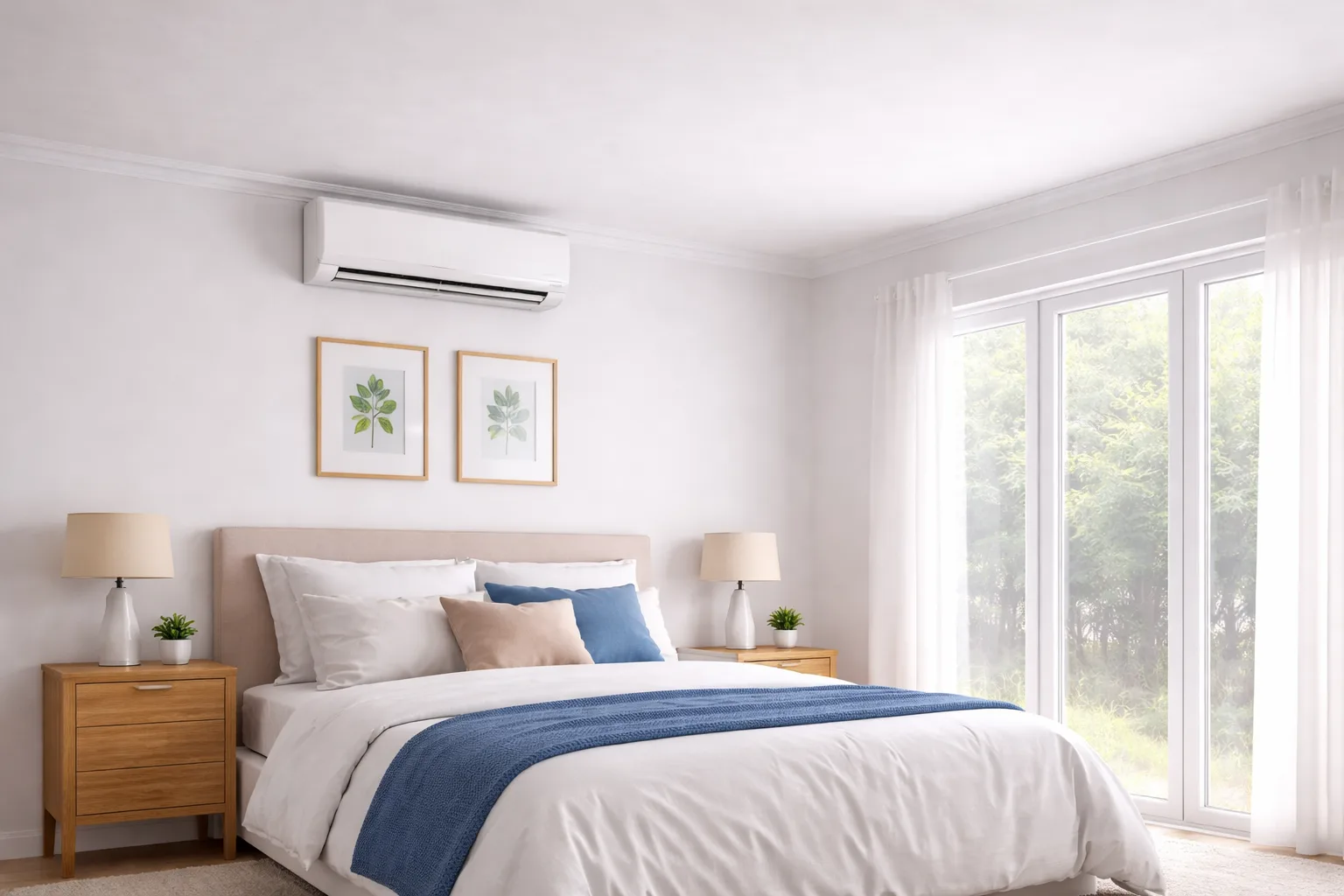
For many Sydney households, air conditioning is the better long-term option.
That is especially true if you want:
- Reliable cooling during humid weather
- Stronger whole-home comfort
- Heating and cooling in one system
- Better zoning and smart control
- More consistent results across the summer
An evaporative cooling system may still suit some homes. However, it is usually better suited to dry inland climates rather than coastal Sydney.
If you want dependable performance, air conditioning systems are generally the safer choice.
How to cool a room without air conditioning
While planning a new system, many homeowners also look for ways to keep a room cooler in the meantime.
There are a few ways to reduce heat in the short term:
- Use ceiling fans to improve airflow
- Close blinds and curtains during the hottest part of the day
- Seal gaps that let warm air in
- Open windows in the evening when the temperature drops
- Avoid using ovens and other heat-producing appliances during the day
These steps can help temporarily. However, they are not a true replacement for proper climate control if your home gets very hot in summer.
What should you choose?
When it comes to choosing between evaporative cooling and air conditioning, the right choice depends on your climate, home, and comfort expectations.
If you live in Sydney and want reliable cooling, lower indoor humidity, and better temperature control, air conditioning is usually the stronger option.
If you live in a dry climate and want a lower-energy system with continuous airflow, evaporative cooling may still be worth considering.
The most important thing is choosing a system that suits the home properly. A poorly matched system can lead to weak performance and higher costs over time.
Get expert help choosing the right system
At Ozcon Air Solutions, we help Sydney homeowners choose air conditioning systems that suit the way they live, the layout of the home, and local conditions – not just the cheapest option upfront.
If you want reliable cooling, honest advice, and expert installation, speak with our team about the best air conditioning solution for your property. Call 1300 341 694 or get in touch for a free quote.